

Welcome to this week’s Crypto Weekly Digest, where stablecoins are entering bank vaults, blockchain companies are collecting regulatory passports, and AI agents are apparently preparing to hire one another without inviting humans to the meeting. 🤖 Traditional finance continues to move closer to onchain infrastructure, with major institutions exploring USDC settlement, tokenized securities, crypto-backed lending and new payment connections across several continents. 🏦
At the same time, regulators are becoming much less interested in the industry’s “we will sort it out later” approach, as MiCA licensing, the UK’s upcoming authorization regime and new compliance rules in Australia and Indonesia begin reshaping how crypto businesses operate. 📜 Prediction markets, corporate Bitcoin treasuries and decentralized AI funds are also attracting serious capital, although impressive valuations and ambitious announcements still need to survive the less glamorous stages of execution. 💰
In our AI Spotlight, robots are walking toward Wall Street, software agents are receiving wallets, and companies are spending billions on the infrastructure required to keep the entire AI machine running. ⚙️ Grab your coffee — this week’s technology news comes with plenty of big numbers, bold plans and just enough regulatory paperwork to keep everyone humble. ☕

BNY has expanded its Digital Asset Custody platform so institutional clients can store, transfer, mint and redeem Circle’s USDC within the bank’s existing infrastructure. 🏦 Institutional customers can now convert US dollars into USDC and exchange the stablecoin back into dollars without building a separate collection of wallets, exchanges and operational workarounds. 🔄
The move deepens BNY’s relationship with Circle, as the bank already serves as the primary custodian of the reserve assets backing USDC. 🤝 USDC is the first stablecoin supported by the platform, although BNY says it plans to add more issuers and digital-cash workflows over time. 🪙
In practical terms, one of the world’s largest custody banks is trying to connect traditional cash management with blockchain payments through a single institutional doorway. 🚪 Still, this should be viewed as an important infrastructure upgrade rather than proof that every major institution is suddenly ready to move its money onchain. 🧐
Kraken and Maple have launched an onchain “warehouse facility” designed to finance institutional loans secured by digital assets such as Bitcoin and Ether. 📦 Despite the name, the warehouse does not store physical goods; it is a credit structure commonly used in traditional markets to finance groups of loans more efficiently. 🏗️
The USDC-denominated facility uses a bankruptcy-remote special purpose vehicle, with Maple providing senior financing while Kraken retains part of the transaction to keep its interests aligned with lenders. 💵 Kraken Financial will hold the crypto collateral, while independent administrator Zaria will oversee the facility and help separate its assets from the wider businesses involved. 🔐
This structure could allow Kraken to expand its lending activities without using as much of its own balance-sheet capital, while investors receive overcollateralized exposure that can be monitored onchain. 🔍 The companies have not disclosed the facility’s size or financial terms, so the architecture may be visible, but some important numbers are still hiding behind the warehouse door. 🚪
Chainlink has joined European and South Korean banking groups in Project Pangea, an initiative exploring faster foreign-exchange settlement using regulated euro and Korean won stablecoins. 🌍
The idea is to let financial institutions exchange the two digital currencies directly through atomic payment-versus-payment transactions, meaning both sides of a trade should settle together or not settle at all. ⚛️ Chainlink is expected to provide data, interoperability and transaction orchestration, while FairSquareLab contributes its onchain foreign-exchange settlement technology. 🔗 The project brings together Qivalis, a consortium supported by dozens of European banks, and UniKA, which includes more than a dozen South Korean commercial banks. 🏦
If successful, the system could reduce settlement delays, intermediary-currency dependence and the risk that one side delivers money before receiving the other currency. ⏱️ However, Pangea remains a working group rather than a live payment network, and no production launch date has been announced, so the financial continents are still drawing the map before building the bridge. 🗺️
Stablecore, Circuit and Curql have launched an early-access program allowing selected US credit unions to experiment with stablecoins and other digital-asset services. 🚗 Initial participants include RBFCU, Stanford Federal Credit Union and La Capitol Federal Credit Union, with the participating institutions representing roughly $25 billion in combined assets. 🏦 The program covers potential services such as stablecoin payments, tokenized deposits, Bitcoin access, crypto on- and off-ramps and staking, all connected to existing digital-banking systems. 🧩
It also includes education for employees and members, as adding blockchain products involves rather more than placing a shiny “crypto” button inside a banking application. 🎓 For credit unions, the experiment is partly about keeping members who might otherwise move money to exchanges, fintech platforms or digital banks offering similar services. 🧲 Importantly, this is a testing and evaluation program rather than a full customer rollout, meaning stablecoins have received a visitor’s badge but not yet the keys to every credit union. 🪪
Breez has introduced a developer-toolkit feature that lets users pay from a Bitcoin balance while the recipient receives USDC or USDT on one of more than 30 supported blockchain networks. ⚡ The sender does not need to buy or hold stablecoins in advance, which removes one of the more annoying steps from cross-chain payments. 😅 After a destination address is entered, the system identifies the correct blockchain, calculates the route and fees, and uses the Lightning Network together with liquidity providers such as Flashnet and Boltz to complete the conversion. 🛣️
The sender keeps Bitcoin until the payment begins, while the recipient receives the requested stablecoin without having to care too much about the machinery working backstage. 🎭 The feature is non-custodial and currently supports only outgoing stablecoin payments, although support for receiving stablecoins from external networks is planned. 🔐 The concept could simplify wallets and remittance applications, but its real usefulness will still depend on conversion costs, available liquidity and reliable routing during busy market conditions. 🧮
Blockchain.com and KuCoin have announced separate payment expansions connecting digital assets with financial networks already used in Brazil, Mexico, Bangladesh and Zambia. 🌎 Blockchain.com’s Brazilian platform targets businesses that want to use USDC and USDT for international treasury operations, payroll and supplier payments while accessing US-dollar liquidity. 💼 KuCoin Pay is taking a more consumer-focused route by integrating with Mexico’s SPEI bank-transfer system, Bangladesh’s bKash and Nagad services, and the MTN and Airtel mobile-money networks used in Zambia. 📱
The common strategy is refreshingly practical: instead of asking people to abandon familiar payment tools, both companies are attempting to connect crypto to systems that customers and merchants already understand. 🔌 Blockchain.com is primarily aiming at corporate cross-border flows, whereas KuCoin’s expansion focuses more heavily on remittances, peer-to-peer transfers and everyday payments. 🛒 The services may reduce some costs and settlement delays, but local regulations, exchange rates, liquidity and the final conversion into spendable currency will determine whether the experience is genuinely smoother than traditional banking. 🧾
Tokenization platform Securitize expects its merger with Cantor Equity Partners II to provide approximately $400 million in gross proceeds, including previously arranged PIPE financing. 💼 Less than 30% of the SPAC’s shareholders chose to redeem their shares, leaving significantly more capital inside the transaction than many public-market mergers manage to retain. 💰
Since the original report was published, shareholders have approved the business combination, clearing an important hurdle before the planned closing on July 1, 2026. ✅ The combined company is expected to begin trading on the New York Stock Exchange under the ticker SECZ on July 2, subject to the remaining closing conditions. 🔔 Securitize provides blockchain-based infrastructure for tokenized investment products, so its listing gives public-market investors a more direct way to follow the development of real-world asset tokenization. 🧱
Going public also means greater reporting duties and market scrutiny, meaning the company is not only bringing traditional assets onto blockchain rails but also bringing itself under Wall Street’s very bright spotlight. 🔦
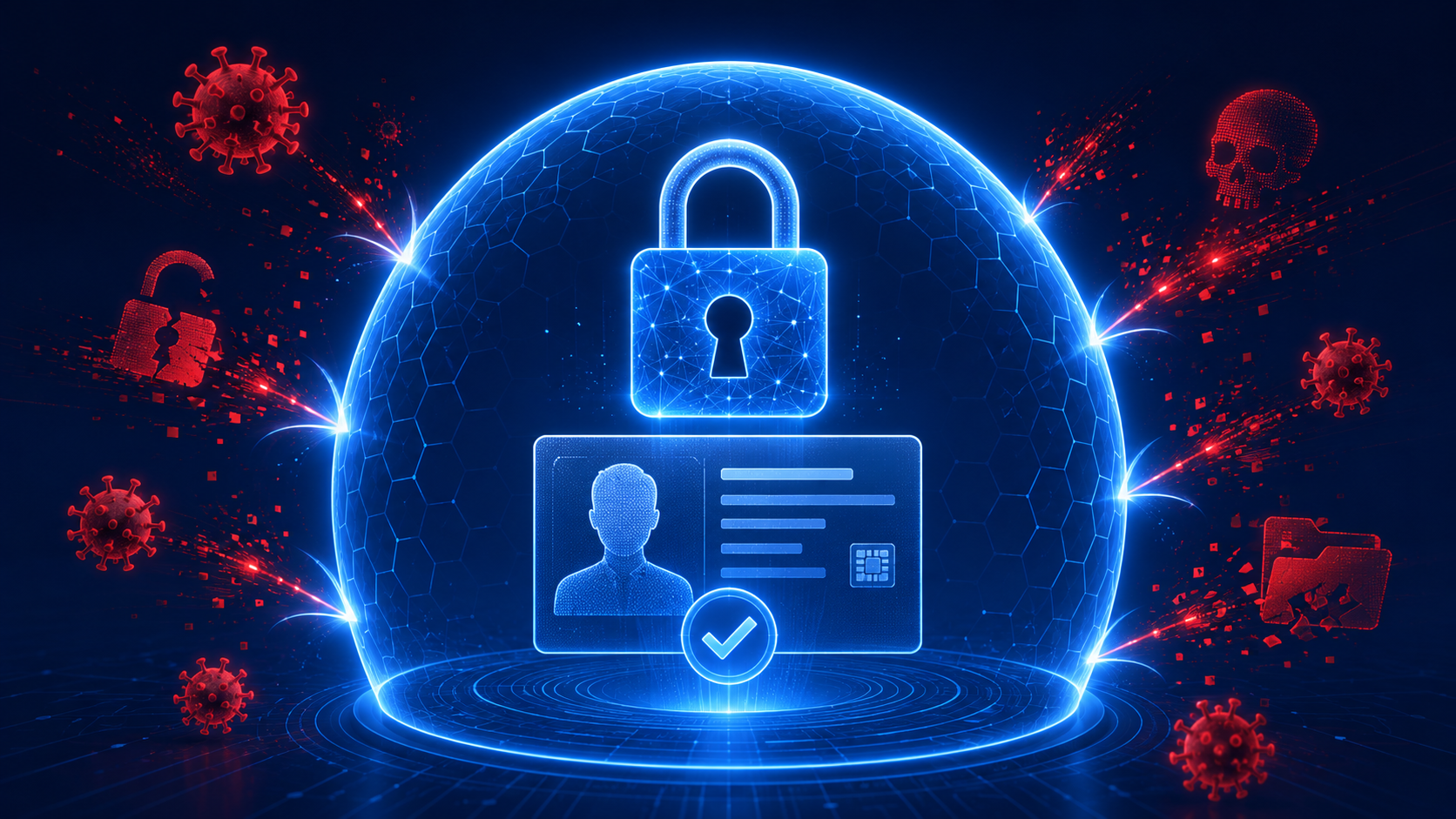
StarkWare has presented a Private KYC demonstration on Starknet that aims to verify selected identity facts without exposing a user’s complete passport, address or personal profile. 🕵️ The system uses zero-knowledge STARK proofs and STRK20 privacy features to confirm details such as whether someone is over 18 or holds a valid credential. 🎂
Users begin by scanning a passport with a smartphone, while the camera and NFC technology check whether the document is authentic and properly signed by the issuing authority. 📲 The identity information can then be encrypted inside the user’s wallet, allowing a verifier to check a mathematical proof instead of collecting another full copy of the document. 🔐 This could reduce the number of large identity databases waiting to become attractive targets for hackers, while still allowing companies to perform necessary eligibility checks. 🎯
The technology remains a demonstration rather than a universal KYC replacement, and real adoption will require legal acceptance, independent security reviews and companies willing to integrate the system. 🧪
Cboe Global Markets has entered the prediction-market space with Cboe Predicts, beginning with binary options based on the Mini-S&P 500 Index. 📊 Traders can take a “yes” or “no” position on whether the index will finish at or above a specified level, with the contract paying either $100 or nothing at settlement. 🎯 The products are already available through Interactive Brokers and are expected to reach Charles Schwab and additional retail brokerage platforms later. 🖥️
Unlike many event-betting platforms, these contracts are structured as US-listed securities options and operate within the established options-market regulatory and clearing framework. 🏛️ Cboe is responding to growing interest in short-term, outcome-based trading, especially among users who prefer a simple market question to a complicated multi-leg options strategy. 🤓 The simplicity can be deceptive, however, because an all-or-nothing payout means a trader can be almost correct about the market and still receive exactly zero dollars. 🎢
Poland-founded crypto exchange Kanga has secured a MiCA authorization in Latvia through SIA AlphaRoute, the company operating its Kanga Exchange EU business. 🇵🇱🇱🇻 The license was issued by the Supervision Committee of Latvijas Banka on June 18 and covers services including crypto custody, trading, exchanges and asset transfers. 📜
Because MiCA allows an authorized provider to notify regulators about cross-border activity, the Latvian approval creates a route for Kanga to offer regulated services across the European Union. 🇪🇺 The decision arrived while Poland was still struggling to complete its national MiCA implementation legislation, following repeated political disagreements and presidential vetoes. 🏛️ In other words, Kanga did not wait for the regulatory traffic jam at home to disappear and instead entered the European motorway through Latvia. 🚦
The authorization strengthens the company’s legal position, but it does not eliminate operational risk, market volatility or the need to comply with consumer-protection and anti-money-laundering rules in practice. 🛡️
Framework Ventures has raised $400 million for its fourth investment fund, but this time the company is looking beyond its familiar blockchain neighbourhood. 💰 The fund will target what the firm calls “frontier technology,” covering crypto alongside artificial intelligence, robotics and energy projects. 🤖
Around half of the capital has reportedly already been deployed, although the identities of the fund’s investors have not been publicly disclosed. 🔒 The founders say the wider strategy is not an escape from crypto but a response to entrepreneurs who are increasingly combining blockchain with physical infrastructure and AI. 🧩
Framework will therefore continue backing areas such as stablecoins and tokenization while also competing in industries where it has less of a historical track record. 🏗️ The $400 million figure sounds impressive, but it matches the size of the firm’s previous fund, making the broader investment mandate more important than the headline number itself. 🔍
The end of the European Union’s MiCA transition period is forcing crypto platforms without the necessary authorization to restrict or reorganize services for customers across the European Economic Area. 🇪🇺 Licensed competitors including Coinbase, OKX and Kraken have responded by offering bonuses and prize campaigns to encourage affected users to move their assets. 🧲
OKX, for example, is advertising an 8% reward on qualifying net deposits, although the bonus is capped and distributed gradually over 52 weeks rather than arriving as one enormous digital gift basket. 🎁
Coinbase announced a 5% transfer incentive for eligible customers, while Kraken promoted a prize draw worth around $1.1 million for euro deposits. 💶 Binance said it would limit some EU services after withdrawing its MiCA application, while Bybit Global is also reducing access even though a separate European entity holds authorization. 🚧 Users should remember that a generous promotion does not automatically make a platform suitable for them, and ESMA recommends checking the exact legal entity in its official register before transferring funds. 🧐
Digital Currency Group-backed Yuma has launched the Total Market Fund, giving institutional investors access to Bittensor’s TAO token and a selection of tokens connected to its AI subnets. 🧠
Instead of asking investors to study and select individual subnets, the product places several parts of the ecosystem into one investment vehicle. 🧺 The fund began with seed capital from an unnamed anchor investor, meaning the product has launched but its starting size and backer remain private. 🕶️
Bittensor’s subnets support services such as computing power, identity tools and AI marketplaces, with participants receiving token-based incentives for useful contributions. ⚙️ Yuma values the network’s 128 subnets at more than $900 million in total, although data from Taostats cited in the report produced a much lower estimate of roughly $300 million. 📏 That large difference is a useful reminder that decentralized AI may be an exciting investment theme, but measuring its real economic value is still more art project than perfect spreadsheet. 🎨
Circle and Japanese financial group Nomura are reportedly planning a service that would use USDC to settle foreign-exchange transactions for Japanese companies as early as 2027. 🇯🇵 The proposed system would allow businesses to convert yen into dollar-denominated stablecoins for overseas trade, investment and other cross-border payments. 💱 Because blockchain networks can operate outside traditional banking hours, the partners hope to reduce delays created by time zones, intermediaries and settlement windows. ⏰
The initiative would bring USDC further into corporate finance rather than limiting its use to crypto trading and consumer transfers. 🏢 Japan already has a regulated stablecoin framework that permits banks, trust companies and licensed money-transfer providers to issue qualifying digital currencies. 📜
However, the project was reported through Nikkei and had not been formally confirmed by Circle or Nomura when the original article appeared, so instant settlement is currently an ambition rather than a button companies can press today. 🛎️
European regulators had authorized 244 crypto-asset service providers under MiCA by late June, with Germany responsible for 57 approvals, or approximately 23% of the total. 🇩🇪 France followed with 26 licenses and also produced the largest group of last-minute approvals during part of June. 🇫🇷
The concentration shows that a common European regulation does not automatically create an identical approval process in every participating country. 🗂️ Germany’s regulator BaFin said the country benefits from a large financial sector and a previous national crypto-licensing system that allowed some businesses to follow simplified transition procedures. 🏦
Companies authorized in one jurisdiction can generally use MiCA’s passporting mechanism to serve customers across the European Economic Area, making the choice of licensing country commercially important. 🛂 Since ESMA updates its interim register weekly and relies on information supplied by national authorities, the published numbers are useful but may not show every approval immediately — even Europe’s crypto database needs time to finish its paperwork. ☕

Nasdaq-listed Solana Company has signed a memorandum of understanding with Kazakhstan’s Alatau City administration to support the planned city’s blockchain and digital-asset infrastructure. 🏙️
The cooperation covers four main areas: digital-asset treasury planning, blockchain infrastructure, institutional adoption and technology-platform development. 🧱 Solana Company is also expected to participate in the proposed Alatau Crypto Cluster, a special pilot zone where digital assets could eventually be used for everyday transactions. 🛒 The frequently repeated $6 billion figure refers to the estimated investment potential of 30 agreements obtained during Alatau City’s roadshow, not to a $6 billion cheque written by Solana Company. 🧾
The wider vision includes AI, digital identity, autonomous transport and other futuristic infrastructure, although the city remains largely in the planning and early-development stages. 🚁 An MOU can help attract partners and expertise, but there is still a very long road between signing documents in a conference hall and buying groceries with crypto in a fully functioning megacity. 🛣️
Japanese financial conglomerate SBI Holdings has agreed to acquire full control of crypto exchange Bitbank through a transaction valued at 46.7 billion yen, approximately $289 million at the time of the announcement. 💴 The deal involves purchasing existing shares, financing a new share allotment and enabling Bitbank to buy back holdings owned by MIXI and Ceres. 🔄
If all stages are completed, Bitbank will become an indirectly wholly owned subsidiary of SBI, although the transaction still requires regulatory clearance and is expected to close around October. ✅ SBI estimates that combining Bitbank with SBI VC Trade would create a business holding roughly 1.1 trillion yen in customer assets and serving about 2.92 million crypto accounts. 🏦
The acquisition would also give SBI another distribution channel for its stablecoin, tokenization and onchain-finance projects. 🌐 Size alone does not guarantee a painless merger, however, as the group must still integrate technology, compliance procedures and customer services without turning two exchanges into one very expensive login problem. 🔑
Mark Zuckerberg has reportedly directed Meta to develop a standalone prediction application called Arena, where users would forecast real-world outcomes using points instead of money. 🔮 The experimental platform is being designed separately from Facebook and Instagram, although parts of it could eventually be connected to Facebook and Messenger. 📱 Meta is also said to be exploring possible cooperation with established prediction-market operators Polymarket and Kalshi. 🤝
According to the reports, the company is targeting people aged between 18 and 34 and hopes the service could eventually attract at least 100 million monthly participants. 🎯 Arena remains in internal testing and might never receive a public launch, making it closer to a high-priority experiment than a finished Meta product. 🧪
A points system could reduce some immediate gambling concerns, but questions about addictive design, misinformation and insider knowledge will not magically disappear just because the chips have been replaced with colourful numbers. 🎰
Vitalik Buterin has described how indistinguishability obfuscation, known as iO, could eventually help create private and collusion-resistant voting systems on blockchain networks. 🗳️ The technology converts software into a protected program that can still produce the correct result while hiding its internal code and sensitive information. 🥷 In a voting system, such a program could process encrypted ballots and reveal the final total without showing how individual participants voted. 🔐
This could remove the need for a trusted committee whose members jointly hold the keys required to decrypt an election result. 🔑 Blockchains would provide the changing public state that an obfuscated program cannot securely maintain by itself, allowing the two technologies to cover each other’s weaknesses. 🧩 Unfortunately, the safest known versions require what Buterin jokingly describes as “galactic” amounts of computation, so nobody should expect a secret Ethereum election booth to appear next Tuesday. 🌌
Shareholders of Swedish health-technology company H100 have approved the new share issuance needed for its planned acquisition of Norwegian investment firms Moonshot and Never Say Die. 🇸🇪 The two target companies collectively hold approximately 2,450 Bitcoin, which would increase H100’s treasury from 1,051 BTC to around 3,500 BTC if the transaction closes. ₿ The deal uses newly issued H100 shares rather than cash, with the sellers expected to own roughly 70% of the combined company afterward. 📊 Shareholder approval removes an important obstacle, but it does not mean that the acquisition and Bitcoin transfer have already been completed. 🚧
Based on current rankings, the enlarged treasury could make H100 one of Europe’s largest publicly traded corporate Bitcoin holders. 🏆 Existing shareholders are effectively accepting significant dilution in return for greater Bitcoin exposure, so the outcome will depend heavily on both the transaction’s execution and the future price of the asset inside that very large backpack. 🎒
Prediction-market platform Kalshi is reportedly discussing a new funding round that could value the company at approximately $40 billion, almost twice the $22 billion valuation it received in May 2026. 🎯 The negotiations could be completed in the third quarter, but neither the size of the investment nor the final valuation has been confirmed, and Kalshi declined to comment on the report. 🤐 Its previous Series F round raised $1 billion from investors including Coatue, Sequoia Capital, Andreessen Horowitz, Morgan Stanley and ARK Invest, while Kalshi said institutional trading activity had increased by 800% over six months. 💰
The proposed valuation reflects the rapid growth of event contracts, which allow users to trade on outcomes ranging from elections and economic data to sports and weather. 🌦️ However, a valuation is an investor’s estimate rather than money sitting in the company’s bank account, and Kalshi is still fighting several US states over whether some sports contracts are federally regulated derivatives or unlicensed betting products. ⚖️ Investors are therefore making a very large prediction about a company whose main business is helping everybody else make predictions — wonderfully appropriate, although certainly not risk-free. 🔮
South Korea’s Financial Services Commission has included tokenized securities in a much wider modernization program covering settlement systems, trading hours, artificial intelligence and blockchain infrastructure. 🇰🇷 The country has already approved legal amendments recognizing distributed ledgers as valid securities registries and allowing regulated token securities to be issued and traded, with the framework scheduled to take effect in February 2027. 📅
Regulators are also preparing a roadmap for shorter settlement periods, a new system for over-the-counter transactions in unlisted shares and fractional investments, and gradually extended trading hours. ⏱️ Importantly, token securities are not being treated as ordinary cryptocurrencies wearing a business suit; they will remain financial securities subject to investor-protection and capital-market rules. 👔
Detailed standards will continue to be discussed by a public-private council, while technical systems connecting existing securities accounts with blockchain records are still under construction. 🏗️ South Korea is therefore not replacing its stock market with a giant crypto wallet, but it is quietly adding blockchain plumbing underneath parts of the traditional financial building. 🔧
The UK Financial Conduct Authority has published its final crypto rules, with the new regulatory regime expected to begin on October 25, 2027. 🇬🇧 Companies will be able to submit authorization applications between September 30, 2026 and February 28, 2027, giving the FCA time to examine them before the new system becomes operational. 📝 Trading platforms, custodians, stablecoin issuers, staking businesses and other crypto intermediaries operating in or serving the UK will need the appropriate FCA permission. 🔐 Existing anti-money-laundering registration will not be automatically converted into a full license, while firms already authorized for traditional financial activities may need to expand their permissions. 🔄
The rules introduce standards covering capital and liquidity, governance, operational resilience, customer treatment, stablecoin reserves, disclosures and market abuse. 🏦 Britain is not banning crypto, but it is replacing the industry’s old “enter first and discuss the paperwork later” approach with a rather substantial entrance examination. 🎓
Indonesia’s Financial Services Authority has introduced rules requiring people who recommend cryptocurrencies and other digital financial assets to hold a relevant competency certificate, unless they are already covered by another professional license. 📜 Influencers will only be allowed to recommend assets listed on authorized exchanges, while any exchange, wallet or other service provider appearing in promotional material must also be properly licensed. ✅
Marketing campaigns must be organized through regulated financial-services companies, published through their official channels and supervised by firms that remain responsible for the content. 📱 This shifts part of the legal burden away from individual followers, who previously had to decide whether a smiling creator with a chart and dramatic background music was actually qualified to discuss investments. 🎬 The regulation is designed to reduce misleading promotions and make it easier to identify who is accountable when sponsored content crosses the line into financial advice. 🛡️ A certificate will not magically make every prediction correct, but Indonesia clearly wants “trust me, bro” to become a less acceptable professional qualification. 🧑🎓
Australia’s crypto Travel Rule took effect on July 1, 2026, requiring regulated virtual-asset businesses to collect additional information when processing incoming and outgoing transfers. 🇦🇺 Users may be asked for the names of senders and recipients, the platform involved in the transaction and, when moving funds to a self-custody wallet, confirmation that they control the address. 👛 The rule applies to both domestic and international value transfers, and AUSTRAC confirms that there is no minimum transaction threshold, meaning even a very small transfer can carry information requirements. 🪙
Businesses must collect information from the payer, verify certain details and pass required data to other regulated institutions participating in the transfer. 🔎 The objective is to make money laundering, terrorist financing and scams easier to investigate, although privacy advocates remain concerned about databases connecting personal identities with blockchain addresses. 🕵️ For most exchange customers, the change may involve only a few extra form fields, but the days when regulated crypto transfers could travel through Australia wearing fake moustaches are officially ending. 🥸
Story Protocol has rebranded as the DATA Foundation, renamed its blockchain the DATA Network and announced that its IP token will migrate to DATA on a one-to-one basis. 🔄 Existing holders do not need to take immediate action, and the foundation has specifically warned users not to respond to unofficial messages requesting manual token transfers. 🚨 The strategic shift follows difficulties persuading major entertainment, gaming and media companies to place valuable intellectual property inside an open, permissionless licensing system. 🎵
The project will now focus on AI training data, using its Trace platform to record information such as data origin, consent, licensing terms and payment history while keeping the underlying content confidential. 🤖 Poseidon is intended to clean and evaluate raw contributions, while the integration with human-data marketplace Kled is expected to bring a large volume of user-supplied images, videos and other records onto the network. 🧹 The pivot may solve a genuine problem around licensed AI data, but changing the name badge from “blockchain IP” to “blockchain plus AI” does not remove the difficult work of attracting customers, protecting contributors and proving that the business model can scale. 🧪
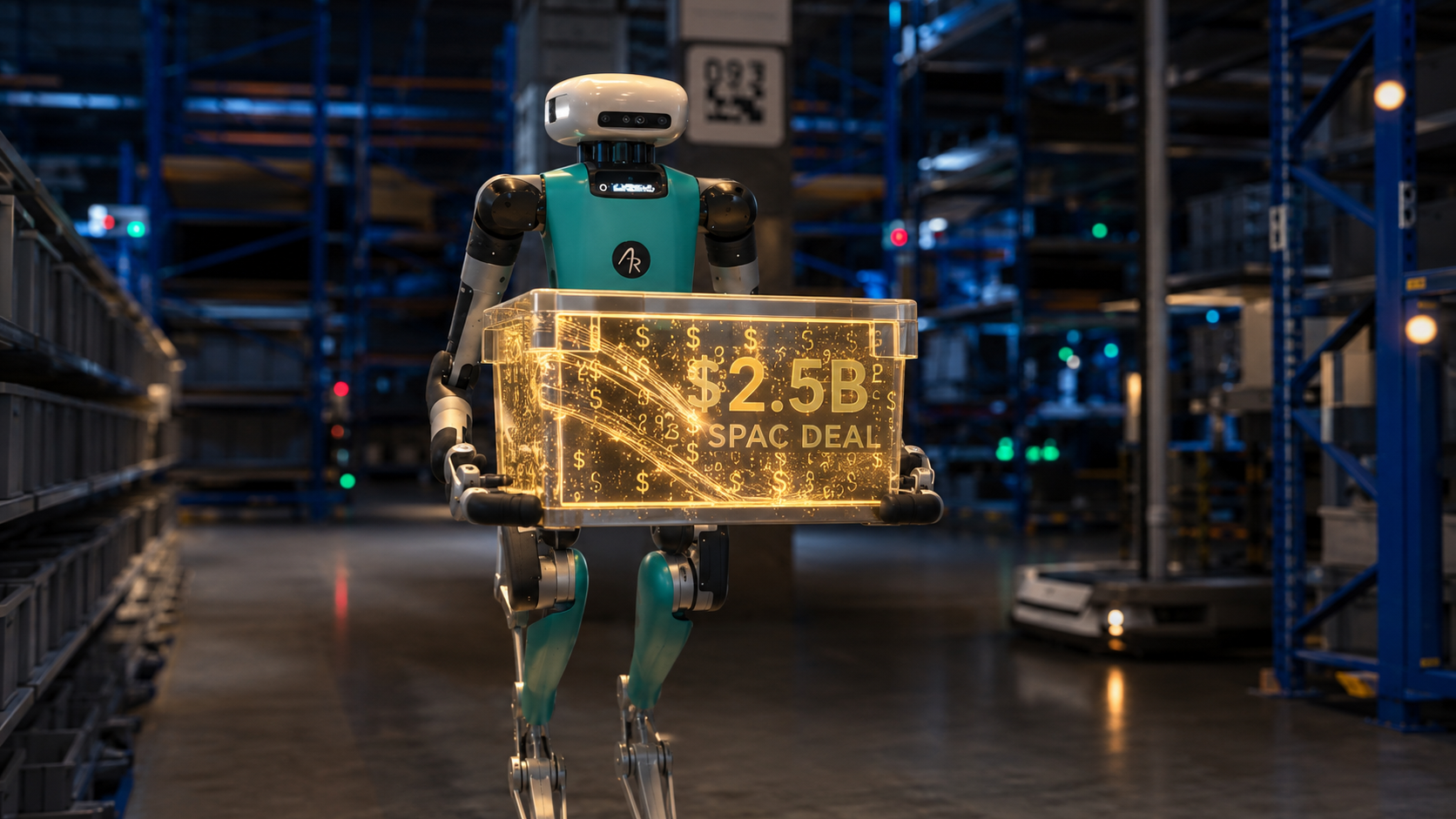
Agility Robotics plans to enter the public market through a merger with Churchill Capital Corp XI, valuing the humanoid-robot company at approximately $2.5 billion before the transaction. 🤖 The deal is expected to provide more than $620 million in gross proceeds, including around $200 million from institutional investors participating through a private investment in public equity. 💰 Agility’s two-legged Digit robot is already operating at nine customer facilities, including sites connected with GXO, Schaeffler, Toyota Motor Manufacturing Canada and Mercado Libre, and the company says its machines have completed more than 65,000 working hours. 🏭
The company has also reported more than $300 million in multi-year orders for its next-generation Digit v5, although some of those orders depend on contractual milestones being achieved. 📋 Agility intends to use the new capital to increase production, deliver existing orders and expand deployments, rather than teaching Digit how to ring the opening bell with perfect robotic elegance. 🔔 The merger is not completed yet and still requires shareholder approval, an SEC review, regulatory clearances and other closing conditions, so Digit has started walking toward the stock exchange but has not entered the building. 🚧
Crypto exchange OKX has launched OKX AI, a marketplace where autonomous AI agents can find services, hire other agents, make stablecoin payments and build portable blockchain-based reputations. 🤝
The platform opened to developers after a closed beta involving 50 early service providers and builds on OKX technology that lets software agents control wallets and maintain persistent digital identities. 🪪 Early participants include CertiK, which can evaluate the security of wallets and tokens, CoinAnk, which sells market data by individual query, and GenLayer, which is developing a dispute-resolution system for disagreements between agents. ⚖️ OKX argues that blockchain payments could support tiny, round-the-clock transactions that would be inconvenient or expensive through conventional banking infrastructure. 🪙
Developers can access the marketplace through the company’s Onchain OS without opening a regular OKX account, and the toolkit supports coding environments including Claude Code, Codex, Hermes and OpenClaw. 🧑💻 The larger idea of a self-operating “agent economy” remains highly experimental, because giving software a wallet is easier than making sure it hires responsibly, spots fraud and does not accidentally outsource a simple task to seventeen other robots. 😅
Ford has hired 350 veteran engineers after its increasing reliance on AI and automated quality-control systems failed to produce the level of vehicle quality the company expected. 🚗 Some of the specialists previously worked for Ford, while others came from suppliers, and their role includes identifying potential failure points before components reach the factory floor. 🔍 Company executives admitted that feeding design requirements into an AI system did not automatically produce a high-quality product, which is an unusually direct way of saying that the computer needed more supervision. 💻
Ford is not abandoning AI, as the returning engineers are also training younger employees and helping reprogram the company’s automated tools using knowledge gained through years of practical engineering work. 🧠 CEO Jim Farley said improvements in quality have lowered warranty and recall costs, producing hundreds of millions of dollars in cost benefits, while Ford also placed first among mainstream brands in a recent J.D. Power initial-quality ranking. 📉 The story is therefore less about humans defeating AI and more about experienced humans teaching AI where the bolts, tolerances and real-world problems are hiding. 🔧
Figma has introduced a large product update that brings code layers, animation tools, 3D transforms, AI-generated shaders and customizable plugins directly into its collaborative design environment. 🎨 Code layers allow teams to clone repositories, turn designs into interactive code-based elements and convert parts of those elements back into editable design layers for further experimentation. 🔄 Figma Motion adds a timeline, keyframes, presets, easing controls and spring animations, letting designers create movement without exporting their work to a separate animation application. 🎬 The company’s AI agent can also generate an initial animation, build shader effects and create reusable plugins after receiving a natural-language instruction. ✨
The broader goal is to reduce the traditional gap between designers, developers and product managers by letting them explore working ideas together before worrying about perfectly polished production code. 🧩 Not every tool is universally available yet, as Motion is in open beta, code layers are initially in closed beta and some AI-powered creation features may consume paid AI credits once they become generally available. 🧾
Adobe has entered into a definitive agreement to acquire Topaz Labs, a company known for using specialized AI models to sharpen, restore and increase the resolution of images and video. 📸 Topaz has operated for more than two decades and has recently developed products including Astra for video upscaling and Wonder for image retouching, while its production technology received an Emmy. 🏆
Adobe plans to integrate Topaz technology into Firefly and other Creative Cloud applications, but it says Topaz products will also remain available as standalone services after the transaction closes. 🧰 Topaz also brings experience in running complex enhancement models directly on consumer devices, potentially making some creative processes faster and less dependent on expensive cloud computing. 💻
The acquisition is particularly relevant for professionals combining traditional camera footage with AI-generated material, since both types of content often need noise reduction, restoration or one final digital polish before anyone wants to display them on a large screen. 🎞️ The deal is expected to close in the second half of 2026, subject to regulatory approval and customary conditions, meaning Adobe has selected the enhancement tool but has not yet clicked “Apply.” ⏳
Patronus AI has raised $50 million in Series B funding to create simulated digital environments where increasingly autonomous AI agents can be trained and tested before receiving real responsibilities. 🧪
The round was led by Greenfield Partners with participation from investors including Lightspeed, Notable Capital, Datadog and Samsung, bringing the startup’s total funding to $70 million. 💵 Patronus builds replicas of websites, software tools and internal corporate systems, allowing agents to practise long, complicated workflows without damaging actual customer accounts or business data. 🖥️
Reinforcement-learning methods can then reward successful actions and penalize mistakes, helping developers identify whether an agent can complete an entire job rather than simply answer one impressive benchmark question. 🧠 The company says its revenue increased fifteenfold over the past year and that demand is coming from major AI laboratories and startups attempting to make agents more dependable. 📈 Simulated worlds cannot reproduce every strange event found in a real company, but they provide a safer location for an AI travel assistant to lose an imaginary reservation before it loses somebody’s actual holiday. 🧳
Proception has settled a trade-secret lawsuit brought by Tesla against founder Jay Li, a former technical lead on the automaker’s Optimus humanoid-robot program. ⚖️ Tesla had accused Li of taking confidential information when creating the startup, but the automaker dismissed the case after the parties reached a settlement whose detailed terms were not publicly explained. 🤐
With the legal dispute behind it, Proception has announced an $11 million seed round led by First Round Capital, with participation from Y Combinator and BoxGroup. 💰 The startup is also shipping its first high-dexterity robotic hands to researchers and robotics companies, while opening the hardware to a broader group of customers. 🦾
Its system combines a hand with 22 degrees of freedom and a sensor-covered glove that gathers detailed information about how human fingers touch, move and manipulate objects without requiring a robot to perform every training demonstration. 🧤 The company still faces the famously difficult task of reproducing human-level dexterity, but at least it can now concentrate on making robots hold complicated objects rather than holding another complicated legal document. 📄
Samsung, SK Hynix and other South Korean companies have announced enormous long-term investment plans covering memory chips, AI data centres and physical AI infrastructure. 🇰🇷 The proposals include approximately $518 billion for four memory-chip factories in southwestern South Korea and another $52 billion for a high-bandwidth-memory packaging centre in the country’s central region. 🏭
Korean technology and energy groups including SK, GS and Naver are additionally expected to invest about $356 billion in AI data centres through 2035, taking the combined commitments above $900 billion. 💸 The government hopes the projects will increase chip production during the AI-driven memory shortage nicknamed “RAMageddon” while spreading semiconductor investment beyond the established industrial centres near Seoul. 🧠 President Lee Jae Myung described semiconductors, physical AI and AI data centres as three connected foundations for the country’s next industrial era, with the administration promising to coordinate the projects directly. 🏛️ These figures represent plans stretching across many years rather than $900 billion arriving in one heroic bank transfer, and success will still depend on construction, energy supplies, skilled workers and continuing global demand for AI hardware. 🔌
Base44, the natural-language app-building platform acquired by Wix for $80 million in 2025, has begun rolling out a specialized AI model called Base1. 🧠 The company trained the model using data generated from tens of millions of real interactions on its platform, hoping that knowledge of actual app-building behaviour will make it more efficient than general-purpose frontier models. 📚
Founder Maor Shlomo says owning the model should eventually improve response speed, reduce inference costs and give Base44 greater control over how its system produces applications. ⚙️ The move also attempts to make the company more defensible, since many so-called vibe-coding platforms currently depend on similar external models supplied by larger AI laboratories. 🏰
Base44 reported more than $150 million in annual recurring revenue in May, although competitor Lovable has announced considerably higher revenue and frontier-model providers are increasingly offering their own coding products. 📊 Training a custom model may therefore strengthen Base44’s position, but owning the kitchen does not guarantee that customers will prefer every application-shaped cake it produces. 🎂
Amazon has announced an additional $13 billion investment to expand its cloud and AI infrastructure in India through 2030. 🇮🇳 The new commitment will primarily support Amazon Web Services data-centre capacity in Mumbai and Hyderabad, following a meeting between CEO Andy Jassy and Indian Prime Minister Narendra Modi. 🏗️ When combined with earlier announcements, Amazon says its investment commitments in India have reached $48 billion, reflecting the country’s importance as both a technology market and a source of engineering talent. 💼
Other technology companies are making similarly large bets, with Microsoft and Google also announcing multibillion-dollar Indian cloud and AI infrastructure projects. 🌐 India has encouraged this expansion through measures including tax exemptions for some cloud services sold abroad when the related computing work is performed in Indian data centres. 📜 The headline figure should still be read carefully, because long-term corporate commitments normally combine capital expenses with operating costs, meaning not every dollar will become a shiny new server rack wearing an “AI” sticker. 🖥️
This week’s stories show that crypto is becoming less isolated from the traditional economy and more deeply connected with banks, payment networks, securities markets and national regulatory systems. 🌍 Stablecoins are increasingly being treated as financial infrastructure rather than simply trading tools, while tokenization and blockchain settlement are moving from conference presentations into pilots, licensed services and corporate strategies. 🔗 Still, many of the biggest announcements remain early-stage projects, pending acquisitions or long-term investment commitments, so a press release should not be confused with a finished product. 🚧
The AI section delivers a similar lesson: autonomous agents, humanoid robots and custom models are advancing quickly, but Ford’s decision to bring experienced engineers back into the process is a useful reminder that human judgment has not reached its expiry date. 🧠 The direction of travel is clear, even when the destination is not — finance is becoming more programmable, regulation more specific and AI increasingly capable of interacting with both software and the physical world. 🧭
Until next week, stay curious, check the small print and remember that even the smartest algorithm may occasionally need an adult in the room. 😄

