

Welcome to another edition of Crypto Weekly Digest, where traditional finance, blockchain and artificial intelligence continue to move closer together. 🚀
This week, Mastercard, BlackRock, BNY, JPMorgan, Ripple and several major banks pushed digital assets further into payments, investment products, settlement systems and everyday financial infrastructure. 🏦 Stablecoins are becoming more useful, tokenized funds are gaining regulatory approval and blockchain records are quietly replacing some of the financial industry’s oldest back-office processes. 🔗
At the same time, crypto is finding new roles in aviation, gaming, education, taxation, commodities and even the rapidly expanding market for AI data centers. 🌍 In our AI Spotlight, autonomous agents are receiving payment tools, security systems, customer service training and even lessons in good taste. 🤖
There is plenty to unpack, so let us take a closer look at the developments shaping the next stage of digital finance and intelligent technology. 👇

Mastercard has completed its $1.8 billion acquisition of BVNK, bringing the stablecoin infrastructure company officially under its global payments umbrella. 💳
The combination is designed to connect traditional currencies with blockchain-based money, allowing banks, fintech companies and large businesses to use stablecoins for payments, settlements, payouts and treasury operations. 🌉
BVNK’s technology could also help financial institutions connect ordinary customer accounts with digital wallets and offer merchants settlement services around the clock. ⏰
Existing BVNK customers are expected to continue using the same products, teams and integrations without having to press any mysterious “migration” button. 😌 The acquisition shows that Mastercard is not simply watching stablecoins from the sidelines but is building the infrastructure needed to make them part of everyday financial services.
Samsung SDS is discussing stablecoin infrastructure, digital asset systems and AI-powered payment models with Dunamu, the company behind South Korean crypto exchange Upbit. 🇰🇷 Samsung’s IT services arm believes its cloud, security and enterprise technology could work well with Dunamu’s blockchain expertise. ☁️
The partnership is still being explored, but it could cover the full stablecoin journey, including issuance, transfers, settlement and new digital payment services. 🔄
Several Samsung companies already purchased a combined 4% stake in Dunamu in May, suggesting this is more than a casual coffee meeting between two technology giants. ☕ The talks also follow Samsung Electronics’ plans to support stablecoins in Samsung Wallet, giving the group a growing collection of connected digital finance projects. 📲
If these plans develop, Samsung may become involved not only in the wallet users see but also in the infrastructure quietly working behind it. ⚙️
BlackRock has launched two tokenized money market products designed to hold reserves for regulated stablecoin issuers in the United States. 💵 The first product is an Ethereum-based share class investing in cash, short-term US Treasurys and Treasury-backed overnight agreements, with transfers available between approved wallets. 🔗
The second is a multichain institutional fund that automatically reinvests daily dividends and is specifically designed for digital asset and stablecoin reserve management. 📈 Both products were structured to qualify as eligible reserve assets under the US GENIUS Act, combining blockchain accessibility with fairly traditional and conservative investments. 🛡️
BlackRock already operates BUIDL, the largest tokenized Treasury fund, so this is less of a sudden blockchain adventure and more of an expanding product shelf. 🧱 The move could make it easier for stablecoin companies to manage reserves using regulated products that are available directly through onchain infrastructure. 🚀
Ripple has made strategic investments in UK-based Zilo and Licuido as part of its wider push into tokenized capital markets. 🇬🇧 Zilo provides transfer agency technology for wealth managers, while Licuido offers tokenization solutions under regulation from the UK Financial Conduct Authority. 🏛️
Ripple expects their services to support regulated fund issuance, transfer agency operations and the movement of collateral through the XRP Ledger. 🔄 One important goal is to let tokenized fund units become usable as collateral immediately after they are issued, instead of sitting quietly and looking financially decorative. 😴
This could reduce idle capital and make tokenized investment products more useful across trading, lending and institutional settlement systems. 💼 The investments also build on recent activity around XRPL, including the launch of a tokenized liquidity fund share class by Aviva Investors. 📊
Hong Kong-licensed HashKey Exchange has received approval to open a client money account with JPMorgan Chase. 🏦 The account will help HashKey separate customer funds from its own corporate money while supporting settlement through JPMorgan’s banking infrastructure. 🔐
This kind of arrangement may sound less exciting than a new token launch, but it is essential for exchanges trying to look and operate more like regulated financial institutions. 👔
HashKey recently activated a similar customer funds account with DBS Bank, enabling fiat deposits, withdrawals and settlement services. 💱 Working with two major global banks could improve the exchange’s access to traditional financial rails and strengthen confidence among institutional customers. 🌉
The development reflects a wider trend in which regulated crypto platforms are building closer connections with established banks instead of trying to replace them entirely. 🔗
Bybit has started accepting tokenized shares of six major US companies as collateral for margin trading and lending products. 📊 Eligible users can now use blockchain-based versions of Nvidia, Robinhood, Circle, Tesla, Alphabet and Apple shares to support borrowing or leveraged positions. 💸
The tokens are part of the xStocks offering created with Backed and are designed to be backed one-to-one by underlying securities held with a regulated custodian. 🛡️ In practical terms, a tokenized Apple or Tesla position no longer has to sit politely in a portfolio because it can also unlock liquidity elsewhere on the platform. 🔓
Bybit joins Kraken and Bitget in expanding tokenized equities beyond simple spot trading and into lending and collateral services. 🏁 The idea creates more flexibility, although users should remember that combining stock exposure, loans and margin can also create a rather energetic collection of risks. 🎢
The European Central Bank says its planned digital euro application will go beyond the requirements of the European Accessibility Act. 🇪🇺 Proposed features include screen-reader compatibility, keyboard navigation, simplified language, clearer error prevention, reduced motion settings and warnings before sessions expire. 👁️
The standalone app is intended to provide basic digital euro services and act as a backup when a user’s normal banking application is unavailable. 📱 It could also let customers change payment providers without having to learn a completely new interface every time, which is a small victory for anyone already managing too many financial apps. 😅
However, both banks and non-bank payment companies have previously opposed being required to support the ECB’s standalone application. 🏦 A 12-month pilot involving 36 payment service providers is currently scheduled to begin in the second half of 2027, before any final decision on issuing the digital euro. 🧪

Emirates has introduced Crypto.com Pay for eligible residents of the United Arab Emirates booking flights through its website or mobile app. 🇦🇪 Mobile customers are redirected to the Crypto.com application to approve the payment, while desktop users can complete the process by scanning a QR code. 📲
Although customers can pay with cryptocurrency, Emirates prices and settles the booking in UAE dirhams, with Crypto.com handling the conversion in the background. 💱 This means the airline can offer crypto payments without filling its corporate treasury with a colourful collection of tokens. 😄
The launch follows a partnership announced in 2025 and comes after Crypto.com received a stored-value payment licence from the UAE central bank. 🛫 For now, the service is limited to eligible UAE residents, and neither company has confirmed when crypto-funded holidays might become available in other countries. 🌍
Circle’s subsidiary has received a limited-purpose trust charter from the New York Department of Financial Services. The charter does not turn Circle into a traditional bank that can freely accept deposits and issue loans, but it allows the company to provide regulated fiduciary and custody-related services. 🔐
These activities can include asset custody, investment management, transfer agency, corporate trust services and securities clearing.
Circle described the licence as a long-term objective because New York’s regulatory framework provides a clearer legal foundation for serving institutional customers. 🗽
The company already received one of New York’s first BitLicenses in 2015, so it is no stranger to collecting serious-looking regulatory paperwork. 📚 The new charter may help Circle expand the institutional infrastructure surrounding USDC, currently the second-largest stablecoin by market value. 💵
The Bank for International Settlements has completed real-value cross-border payment trials under Project Agorá. 🧪 Twenty-eight financial institutions and central banks settled about $1 million across 17 different transaction scenarios using tokenized commercial bank deposits and central bank reserves. 💱
The tests covered six currencies, including the dollar, euro, pound, yen, won and Swiss franc, with an average settlement time of around 80 seconds. ⚡ Participants included major central banks and institutions such as JPMorgan, Citi, Deutsche Bank, UBS, Standard Chartered and BNP Paribas. 🏦
Project Agorá is exploring whether shared tokenized infrastructure can reduce delays and coordination problems in wholesale international payments. 🌐 One million dollars is still a modest amount in global banking terms, but using real funds means the experiment has moved beyond the comfortable world of imaginary test money. 💰
Intesa Sanpaolo significantly increased its exposure to a staked Ether exchange-traded fund during the second quarter. 📈
Italy’s largest banking group tripled its position in the iShares Staked Ethereum Trust ETF to roughly 349,600 shares worth $7.1 million. Ξ At the same time, the bank reduced its position in BlackRock’s IBIT Bitcoin ETF by about 94%, although it continued to hold a much larger $67.6 million position in the ARK 21Shares Bitcoin ETF. ₿ Intesa also maintained its XRP fund exposure, nearly doubled its stake in BitGo and reduced its Coinbase position. 🔄
The filing therefore looks more like a portfolio rebalancing exercise than a dramatic goodbye to Bitcoin. ⚖️ Regulated crypto ETFs allow banks to gain digital asset exposure without directly handling private keys, wallets and the operational headaches that come with crypto custody. 🔑
Tether recorded a net operating profit of $1.5 billion in the second quarter, supported mainly by income from US Treasury securities and repurchase agreements. The stablecoin issuer also reported that its assets exceeded its liabilities by $4.11 billion at the end of June, creating a substantial reserve buffer. 🛡️
USDT’s circulating supply increased by $446 million during the quarter to approximately $184.6 billion, even as the wider stablecoin market contracted. 📊 According to the company’s attestation, USDT continued to represent more than 60% of the global stablecoin market. 🌍
Tether’s business model increasingly resembles a very large digital dollar service sitting on top of an equally large portfolio of interest-generating government debt. 💵 As long as Treasury yields remain meaningful and demand for USDT continues, that combination can turn stablecoin reserves into a remarkably effective profit engine. ⚙️
Australian crypto brokerage Caleb & Brown has entered the United Kingdom to serve high-net-worth digital asset investors.
The company, which was acquired by Swyftx Group in 2025 for more than $100 million, plans to focus on private clients rather than competing directly with large retail exchanges. 🏦 Its leadership believes the UK remains underdeveloped compared with the United States, Asia and Australia when it comes to investment in Bitcoin and other alternative assets. 📉 Around 8% of UK adults were estimated to own cryptocurrency last year, although the average value of individual holdings had increased. 💷
Caleb & Brown sees an opportunity to provide personalised brokerage services in one of the world’s most established financial centres, where wealthy investors may want more guidance than a standard “buy” button can offer. 🎩 The expansion will test whether Britain’s relatively cautious crypto market is genuinely untapped or simply taking its time over a very long cup of tea. ☕
Aviva Investors has launched a tokenized share class of its US Dollar Liquidity Fund on the XRP Ledger after receiving approval from the Central Bank of Ireland. 🇮🇪
Eligible investors can access the regulated fund through digital wallets, while its underlying assets remain safely held under traditional custody arrangements at BNY. 🔐 The fund invests in high-quality, short-term dollar-denominated debt and money market instruments issued by governments, banks and companies. 💵
Komainu will handle digital asset custody, Licuido will provide the tokenization technology and Ripple’s network will manage the blockchain-based shares. 🔗 Importantly, the tokenized version keeps the same investment objective and liquidity profile as the conventional fund, so the packaging is new even though the financial ingredients remain familiar. 📦
The launch demonstrates how major asset managers are gradually moving regulated investment products onchain without throwing traditional financial safeguards out of the window. 🪟
Japanese game developer Gumi is launching a 3 billion yen, or approximately $18.3 million, cryptocurrency fund together with SBI Financial Services. 🇯🇵 The fund will primarily invest in Bitcoin and major altcoins while also using staking, portfolio rebalancing and hedging strategies. 📊 It will be operated by SBI Crypto Fund, a joint venture majority-owned by SBI Financial Services, with the remaining stake held by Gumi subsidiary gC Labs. 🤝
Gumi says the initiative is intended to connect Japan’s corporate sector with the crypto market and build experience ahead of any future approval of cryptocurrency ETFs in the country. 🌉
The developer has already made digital assets a significant part of its balance sheet, with its crypto holdings nearly doubling over the past year to 14.13 billion yen. 💰 Apparently, creating digital worlds was not enough, so Gumi has now added building a diversified crypto portfolio to its list of side quests. 🕹️
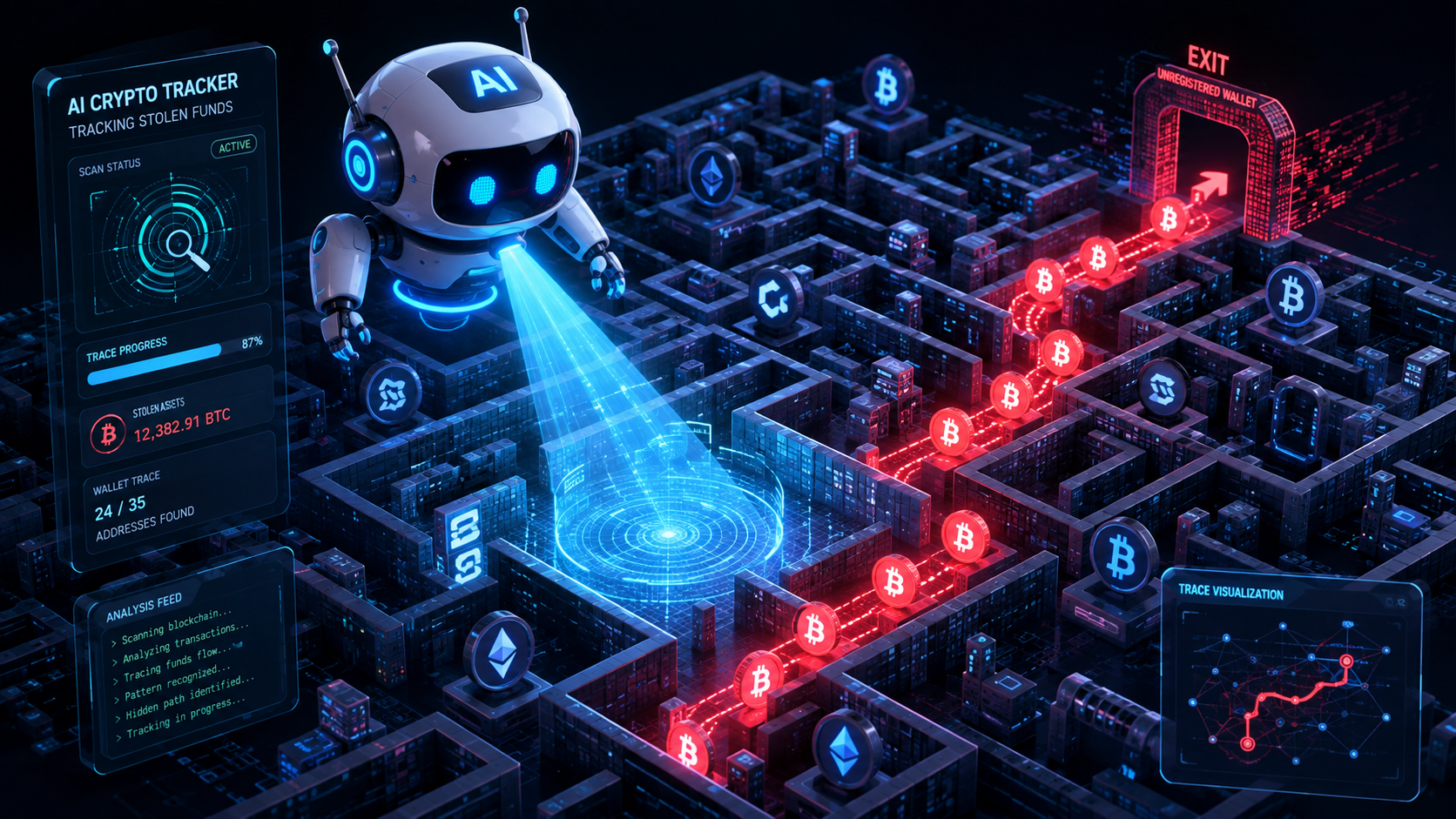
Crypto compliance company AMLBot has launched AI Tracer, a self-service tool designed to help ordinary users follow digital assets across multiple blockchain networks. 🔍 Starting with a transaction hash, the system automatically maps how funds move through intermediate wallets, bridges and known services such as exchanges. 🗺️ It can also track situations in which stolen assets are divided among numerous addresses, a common tactic used to make investigations more difficult. 🧩
The tool currently supports networks including Bitcoin, Ethereum, Solana, Cardano, XRP Ledger, TRON, Polygon, Base and BNB Chain. ⛓️ However, AMLBot clearly notes that AI Tracer cannot freeze funds, observe transfers inside an exchange or guarantee that stolen crypto will be recovered. ⚠️ It is therefore better understood as an investigation assistant than a digital superhero arriving with the missing coins in its cape. 🦸
BNY is preparing a blockchain-based version of its transfer agency business, bringing official fund ownership records and investor transactions onchain. 🏦 Transfer agents perform essential but largely invisible work, including recording who owns fund shares, processing purchases and redemptions and updating investor information. 📝 These records are traditionally stored across several separate systems, forcing financial companies to spend considerable time checking whether all the databases agree with one another. 🔄
BNY’s platform aims to provide participants with a shared source of information, potentially reducing manual reconciliation and operational delays. ⚙️ The bank’s transfer agency services currently cover about $8.6 trillion in assets across 7.6 million accounts, although the existing traditional infrastructure will continue operating alongside the blockchain platform. 💼 Early users are expected to include Baillie Gifford and upcoming tokenized funds connected with BlackRock and BNY’s Dreyfus business, showing that the financial back office is finally getting a technological renovation. 🛠️
Binance is launching options linked to gold and silver through its regulated exchange in the Abu Dhabi Global Market. 🇦🇪 The contracts will be settled in USDT, allowing eligible investors to gain exposure to movements in precious metal prices without purchasing and storing physical bars. 🪙
Options give traders the right, but not the obligation, to buy or sell an asset at a predetermined price, making them useful for both speculation and risk management. 📈 The products expand Binance’s offering beyond cryptocurrencies as digital asset platforms increasingly combine crypto, stocks, commodities and derivatives under a single account. 🧰
Operating through an ADGM-regulated entity also gives the contracts a more formal structure than the offshore products historically associated with many crypto exchanges. 🏛️ Gold may be thousands of years old, but it can apparently still find room for one more digital trading interface. ✨
Texas has temporarily stopped approving new data centers connected to the ERCOT electricity grid while authorities conduct an audit of planned power demand. 🔌 According to Bernstein analysts, the moratorium is unlikely to have a significant effect on major Bitcoin miners that have already secured approved electricity agreements. ⛏️
The pause is primarily aimed at new projects entering the connection queue as Texas evaluates whether its grid can support the rapid growth of mining and AI data centers. 🏗️ Existing miners may even gain a competitive advantage because access to approved power capacity could become more valuable while new connections are delayed. 📈
Bitcoin mining companies have also been converting parts of their sites into AI and high-performance computing facilities, making electricity contracts increasingly important strategic assets. 🤖 In other words, the miners already plugged in may continue working, while newcomers are being politely asked to wait outside with their extension cables. 🔌
The 2026 FIFA World Cup generated approximately $20 billion in prediction market volume, according to blockchain analytics presented by Chainalysis. 🌍 Users traded contracts connected with match results, tournament progress and other football-related outcomes rather than placing only conventional sportsbook bets. 📊
The event showed how sports have become one of the strongest growth categories for platforms such as Kalshi and Polymarket, which allow participants to trade the probability of real-world events. 🎯 The extended tournament format, featuring more teams and matches, created a steady stream of new markets and kept users active throughout the competition. 🏟️
High volume also increases regulatory attention because authorities continue to debate whether sports prediction contracts should be treated as financial instruments or conventional gambling products. ⚖️ Football fans were already experts at loudly predicting every result, so placing those opinions on a market was perhaps the natural next step. 📣
Cryptocurrency ownership in Canada has increased to 25%, up from approximately 10% in 2023, according to research published by the Ontario Securities Commission. 🇨🇦 The survey covered more than 2,000 Canadians and found that awareness of digital assets has increased alongside actual ownership. 📊 Respondents also demonstrated a stronger understanding of crypto-related risks, including volatility, fraud, platform failures and the possibility of losing access to their funds. ⚠️
This suggests that adoption is growing without Canadians necessarily becoming less cautious about what they are buying. 🧐 Regulators are using the results to understand investor behaviour and determine where stronger education or consumer protection may be required. 🛡️ One quarter of the population holding crypto is a meaningful milestone, even in a country where people are famous for remaining calm while their portfolio behaves like a hockey puck. 🏒
The Ethereum Foundation has appointed Pascal Caversaccio, a co-founder and leading contributor to the crypto security response organization SEAL 911, to its board. Ξ Caversaccio is widely known in the Ethereum security community for coordinating responses to hacks, vulnerabilities and other urgent threats affecting blockchain protocols. 🚨
SEAL 911 connects projects with trusted security researchers who can help when an exploit is underway and every minute suddenly becomes extremely expensive. ⏱️ His appointment reflects the foundation’s growing focus on protocol security, privacy and coordinated incident response as Ethereum supports increasingly valuable applications. 🔐 It may also help bring practical experience from real-world attacks into higher-level discussions about Ethereum’s development and long-term priorities. 🧠
A security expert joining the board is not a guarantee that hackers will disappear, but it does mean someone at the table knows exactly what to do when the alarms begin flashing. 🚒
The American Arbitration Association has created a specialized initiative addressing disputes involving cryptocurrency, blockchain technology and Web3 businesses. 🏛️
The project brings together professionals with experience in digital assets, smart contracts, cybersecurity and financial regulation. 🤝 Arbitration can offer companies an alternative to lengthy court proceedings, particularly when a blockchain dispute involves participants located in several different countries. 🌍 Potential cases may concern failed token agreements, smart contract vulnerabilities, decentralized organization decisions, custody arrangements or disagreements between investors and technology providers. 📑
The initiative reflects a growing recognition that blockchain transactions may be automated, but the commercial relationships behind them can still produce very human arguments. 🤖 As the industry matures, Web3 is discovering that even decentralized systems occasionally need a meeting room, a legal framework and someone willing to say who was actually right. 👩⚖️
The physical gold reserves backing Tether Gold increased by 9.5% during the second quarter, even though the price of gold fell by 14.1%. 🥇 It was gold’s weakest quarterly performance since 2013, but the number of investors holding the XAUt token continued to grow. 📉 Each XAUt token represents ownership of one troy ounce of physical gold stored in secure vaults, giving investors blockchain-based access to the precious metal. 🔐
Tether says the reserve increase indicates that some investors used the decline in gold prices as an opportunity to expand their positions rather than leave the market. 🛒 Tokenized gold can be transferred and traded around the clock without investors having to arrange transportation, insurance or somewhere unusually strong to hide a bullion bar. 🚚 The results suggest that even when traditional gold experiences a bad quarter, its digital version can still attract buyers looking for long-term or defensive assets. 🛡️
Bitcoin miner Hyperscale Data has sold approximately 100 Bitcoin and obtained a BTC-backed credit facility to finance the development of an AI data center in Michigan. 🏗️ The planned facility is connected with a potential multibillion-dollar infrastructure agreement and is intended to support advanced artificial intelligence workloads. 🧠 Instead of abandoning Bitcoin entirely, the company is using part of its treasury as both a source of direct capital and collateral for additional financing. ₿ The move reflects a broader industry trend in which mining companies are converting their access to electricity, land and data center facilities into AI infrastructure businesses. ⚡
These companies already operate energy-intensive computing sites, making the transition from mining calculations to AI calculations relatively logical, although certainly not inexpensive. 💸 Hyperscale is effectively asking its Bitcoin treasury to help build an AI campus, giving the phrase “digital assets funding digital intelligence” a very literal meaning. 🏫
Nigeria has introduced rules requiring crypto exchanges and peer-to-peer marketplaces to collect, report and remit taxes related to digital asset transactions. 🇳🇬 The framework explains how existing tax obligations apply to activities such as selling cryptocurrency, earning rewards and receiving other forms of digital asset income. 💰 In some situations, platforms will be required to transfer the withheld tax in the same token in which the original transaction occurred. 🪙
Service providers must also keep detailed transaction and customer records, connecting crypto activity more closely with Nigeria’s broader identity and tax systems. 🗂️ The rules are intended to make tax enforcement more practical in one of Africa’s most active cryptocurrency markets, where a large amount of trading takes place through informal or peer-to-peer channels. 🌍 Crypto may be decentralized, but Nigeria’s tax authority has made it clear that the tax bill has no intention of becoming equally difficult to locate. 🔎
Kenya has launched a blockchain-based platform that places more than 30 million academic records from the Kenya National Examinations Council on Avalanche. 🇰🇪 The system allows employers, universities and other authorized organizations to verify qualifications without relying entirely on physical certificates or slow manual checks. ✅ It is designed to address the thousands of forged educational documents reportedly discovered in the country each year. 📜 Because blockchain records are difficult to alter after publication, the platform can provide a reliable reference showing whether a certificate matches an official record. 🔗 The system could also make verification faster for graduates applying for jobs or further education both inside Kenya and abroad. 🌍 Diplomas may still end up in decorative frames, but their authenticity will now depend less on impressive paper and more on a record that cannot be improved with a home printer. 🖨️

MoonPay has launched PayBox, a payment vault that allows users to prepare cryptocurrency transactions through conversations with ChatGPT and Claude. 💬 The AI can arrange purchases, token swaps, crosschain transfers and DeFi interactions, but users can still require passkey approval before any money moves. 🔐 People can also set spending limits and permissions that allow an agent to complete selected actions automatically without requesting approval every single time. ⚙️
MoonPay says the system protects wallet keys using multi-party computation and trusted execution environments, preventing either the AI assistant or MoonPay from independently controlling the funds. 🛡️ PayBox supports several blockchains and payment methods, including bank accounts, debit cards, Apple Pay and PayPal, while developers can integrate it into their own AI products. 🌐 It is an important step toward autonomous digital commerce, although giving an AI a budget will probably make “please do not spend it all at once” a surprisingly modern instruction. 🛒
Data security company Cyera has agreed to acquire Oasis Security for approximately $1 billion, with most of the price expected to be paid in cash. 💰 Oasis specializes in protecting non-human identities, including AI agents that need permission to access corporate applications, databases and cloud environments. 🤖
This area is becoming increasingly important because companies are deploying growing numbers of autonomous agents that can perform real work but may also become powerful security risks when poorly supervised. 🔑 Cyera plans to combine Oasis’s identity technology with its existing data security products, creating a broader platform that monitors both sensitive information and the machines accessing it. 🔗
The deal follows Cyera’s recent $600 million funding round at a $12 billion valuation and continues the company’s rapid series of cybersecurity acquisitions. 📈 Apparently, the AI workforce is expanding quickly enough that it already needs its own identity cards, access rules and a billion-dollar security guard. 👮
Encore AI has raised $30 million in a Series A round led by Team8 to develop voice and text agents that learn from real customer conversations. 💵 Its platform studies call recordings, emails, messages and CRM data to identify which sales and support techniques produced successful results. 🔍 Encore then turns the most effective approaches used by human employees into playbooks that its AI agents can follow independently or recommend during live conversations. 🧠
This process, described by the company as “interaction mining,” can also reveal weak points, repeated customer frustrations and inefficient stages in an organization’s existing workflow. ⚙️ Encore already works with more than 40 enterprise customers, mainly financial institutions, and says its recurring revenue has grown more than fivefold since its previous funding round. 📈 The result could be an AI agent that remembers every great sales call, every useful anecdote and possibly even the office’s most successful joke. 😄
Identity management company Okta has agreed to acquire Permiso Security in a transaction reportedly valued at just under $200 million. 💰 Permiso develops technology that monitors suspicious behavior in cloud environments after a user, application or AI agent has already passed the login process. 👀
This reflects a broader shift in cybersecurity, as simply confirming an identity at the front door is no longer enough when autonomous software can continue making decisions inside the network. 🚪
Permiso’s tools help security teams observe what machine identities and human users actually do with their approved access and identify behavior that may indicate an attack. 🛡️ Okta expects the acquisition to strengthen its ability to protect AI agents as they become more deeply involved in everyday business operations. 🤖 In other words, the security badge may be valid, but Okta would still like to know why the badge holder is downloading the entire database at three in the morning. 🌙
New York-based Pangram has raised $9 million to expand its tools for identifying AI-generated text and images. 🔎 The funding round was led by Menlo Ventures and arrived alongside Pangram 4, a new text detection model, and a research preview of the company’s image detector. 🖼️ Pangram claims its latest text system can identify AI-assisted and mixed human-AI writing with accuracy above 99%, including content processed through tools designed to make machine-generated text sound more natural. 📊 The startup sees growing demand from organizations trying to separate authentic human work from automated articles, assignments, reviews, spam and online misinformation. 🌐
However, AI detection remains a difficult field because models and rewriting methods continue to improve, meaning detectors must constantly chase a moving target. 🏃 The internet is filling with machines writing like people, so Pangram is building another machine to point at them and say, “nice try.” 🤨
A new startup called June has emerged from stealth with $20 million in pre-seed funding led by Marc Benioff’s Time Ventures. 🚀 The company wants to help large organizations deploy AI systems without relying on constantly expanding teams of specialized engineers and consultants. 🏢
June’s founders argue that AI adoption has created a strange situation in which technology designed to automate work often requires considerable human effort to install, connect and maintain. 🔧 Their proposed solution is an AI-based platform that can understand existing enterprise systems and handle more of the complicated implementation process itself. 🤖 The four founders previously built Bonobo AI, which Salesforce acquired in 2019, and later worked on AI initiatives inside the company before starting June. 🔄 The startup is therefore offering a beautifully circular idea: when businesses struggle to deploy AI, simply send in more AI to deal with the AI. ♻️
The company behind Design Arena has raised $7.9 million in seed funding to help AI models learn what people actually consider attractive, useful or enjoyable. 💵 Design Arena allows users to compare outputs from different generative models and vote for the version they prefer, producing large amounts of human feedback. 🗳️
The platform began when its founders were building an AI game engine and discovered that models could create functional games without understanding how to make them genuinely fun. 🎮
It has since attracted around 5.3 million users and found customers among AI laboratories looking for scalable feedback on visual design and creative quality. 🌍 The new company, named Intelligence, plans to turn these preferences into training data that can improve models in areas where technical correctness alone is not enough. 🧠 After years of teaching AI how to generate almost anything, the next challenge is apparently explaining why some results still look like a restaurant menu designed by a confused robot. 🍽️
Friend has introduced a redesigned version of its AI wearable, adding a built-in speaker that lets the necklace talk directly to its owner. 🗣️ The original device listened to conversations and sent text messages, while Friend 2.0 is intended to offer a more immediate and consistent personality through spoken responses. 📿 Creator Avi Schiffmann continues to position the product as a digital companion rather than a productivity assistant, focusing primarily on conversation, emotional support and everyday commentary. 💬
The new version costs $249, a considerable increase from the original launch price of $99. 💸 It is still not entirely clear what practical tasks the device performs beyond talking with its user, which makes the emotional relationship itself the main product. 🤔
Friend may not organize your calendar or write your reports, but it can now compliment your creative ambitions out loud, which is either comforting or slightly unsettling depending on the time of day. 😅
Google says its internal AI tools helped identify and fix 1,072 security flaws across two Chrome versions released in June. 🛡️ That is more than the 1,036 bugs patched across the previous 23 browser versions released over roughly two years. 📊
Security researchers have long predicted that AI would dramatically increase the number of vulnerabilities discovered in software, forcing defenders to adopt similar technology to keep pace with attackers. ⚔️ Google’s results suggest this shift is already happening, as automated tools can examine large amounts of code and uncover patterns that human reviewers might overlook. 🔍
Finding more bugs does not necessarily mean Chrome suddenly became less secure, because many of the vulnerabilities may simply have remained hidden without the new detection methods. 🧩 It does mean that AI has become the extremely enthusiastic inspector who arrives for a routine check and produces a report containing more than a thousand items. 📋
Dili has raised $15 million in Series A funding to expand its AI platform for managing regulatory compliance across large US infrastructure and construction projects. 💵 Together with its earlier seed round, the financing brings the company’s total capital raised to $21.7 million. 📈
Dili helps project teams navigate complicated requirements involving wages, apprenticeships, worker safety, environmental standards and federal funding. 🏛️ Its technology can review contracts and project records, identify missing evidence and help companies prepare the documentation required to prove that regulations have been followed. 📚
The timing is significant because the rapid expansion of AI data centers, energy facilities and other major infrastructure projects is creating more construction work and considerably more compliance paperwork. ⚡ AI may be responsible for the data center boom, but Dili is making sure the resulting mountains of forms do not require their own separate building. 🗄️
That is all for this week, but the direction of travel is becoming increasingly clear. 🧭 Blockchain is moving beyond trading and speculation into regulated funds, banking services, payment infrastructure, public records and institutional settlement. 🏛️
Meanwhile, AI agents are evolving from helpful chatbots into active participants that can communicate with customers, access company systems, manage transactions and support major infrastructure projects. 🤖 This progress also creates new questions around security, identity, compliance and how much freedom autonomous software should really receive. 🔐
The financial and technological worlds are not simply experimenting with these tools anymore; they are beginning to build long-term systems around them. 🏗️ We will be back next week with another selection of the most important crypto, blockchain and AI stories, hopefully with fewer bugs than Chrome found in June. 😄

